A packed international forum on the digital economy and industrial digitalisation ran through a full agenda. What stayed with the room afterwards was not any single conclusion but a shift in where the discussion had moved: a few years ago the headline word at events like this was “on-chain”, and this time it was “asset rights” and “trustworthy infrastructure” — the questions Paralism’s parallel foundation is built to answer.
We are delighted to announce that Paralism’s patent, “Method for accumulating and co-assembling uniform data” has recently been granted by the European Patent Office, with the patent number 3503495.
As the key support for Web3 infrastructure, blockchain technology’s scalability and parallelism play a crucial role in the large-scale development of Web3 applications. This patent by Paralism addresses the issue of data synchronization efficiency across chains, inherently providing cross-chain capabilities and bringing L1 scalability and performance comparable to that of L2.
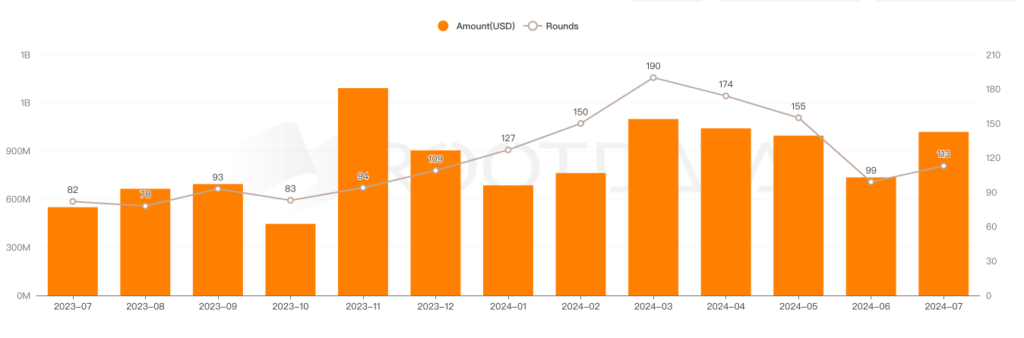
In July 2024, Web3 related projects secured a total of 113 funding rounds, with the total amount raised exceeding $1.1 billion USD, almost equals to the monthly average of the first half of the year. However, compared to July of the previous year, both the funding amount and the number of rounds has significantly increased. In fact, since last November, the overall fundraising environment for the Web3.0 market has notably improved, maintaining a relatively stable state this year.
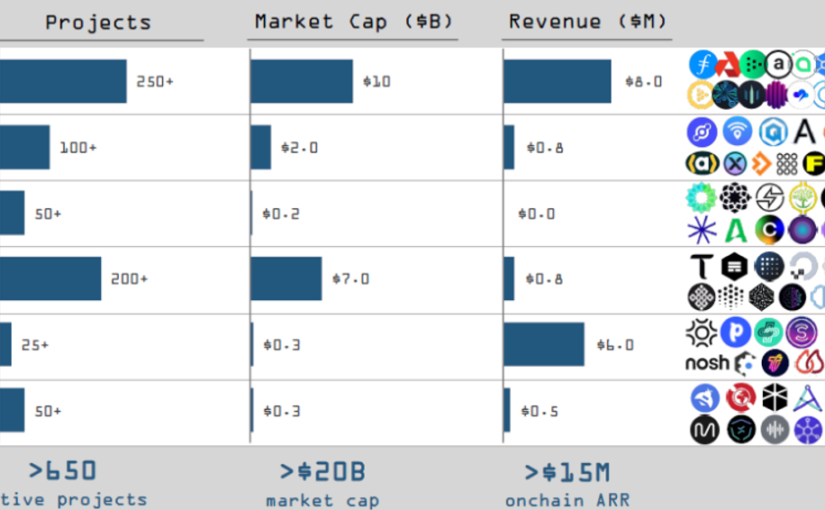
How would a project that combines the hottest technological concepts of AI and the popular blockchain sector, DePIN? Today, let’s discuss such a project that inherently carries topics and buzz—io.net.
io.net is a decentralized GPU network built on Solana designed to give unlimited computing power to ML/AI applications. In March this year, io.net raised $30 million in a Series A funding round, bringing its total funding to $40 million, including last year’s seed round, with a latest valuation of $1 billion. Investors include Hack VC (Series A lead), Multicoin Capital, Delphi Digital, Foresight Ventures, Animoca Brands, Continue Capital, Solana Ventures, Aptos, LongHash Ventures, OKX Ventures, Amber Group, SevenX Ventures, and ArkStream Capital, etc.
Computing: The Most Successful Business Model of DePIN
On this June 27th, the Layer 1 project MegaETH, developed by MegaLabs, completed a $20 million seed funding round with a valuation of at least $100 million. The round was led by Dragonfly, with participation from Figment Capital, Robot Ventures, Big Brain Holdings, and others. Angel investors included Vitalik Buterin (co-founder of Ethereum), Joseph Lubin (founder of ConsenSys), Sreeram Kannan (founder of EigenLayer), Kartik Talwar (ETHGlobal co-founder), Mert Mumtaz (Helius Labs co-founder), Santiago Santos, Hasu, and Jordan Fish (Cobie), etc. Why does MegaETH attract support from key figures in the Ethereum ecosystem like Vitalik? What significance does it hold for the Ethereum ecosystem? Let’s check it out together.
What is MegaETH?
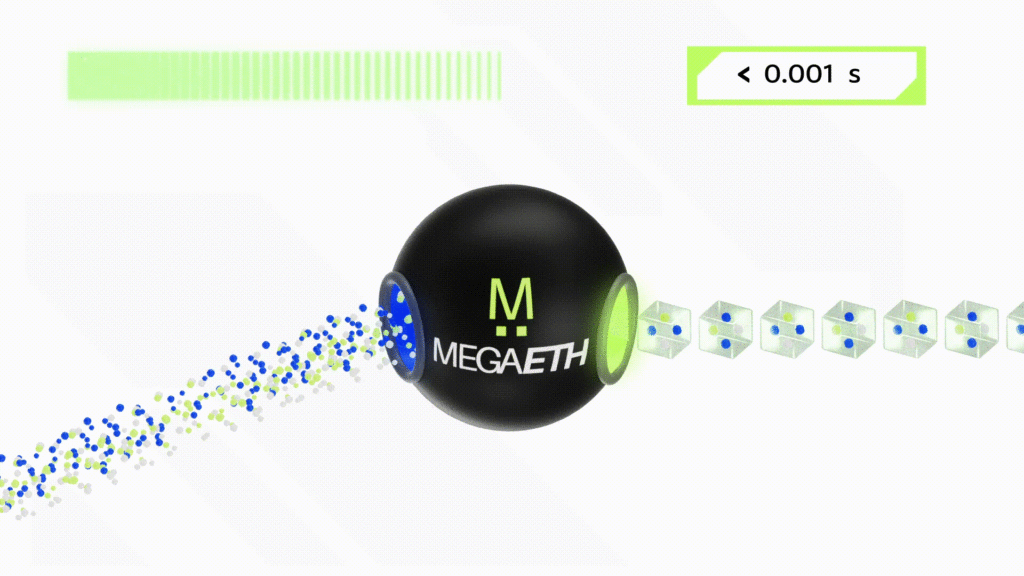
MegaETH describes itself as the “first real-time blockchain.” The team analyzed the difficulties and bottlenecks faced by existing Layer 2 solutions in improving performance and provided specific, detailed solutions. In simple terms, MegaETH aims to enhance blockchain performance through a heterogeneous blockchain architecture and a “Hyper-optimized” EVM execution environment, and pushes throughput, latency, and resource efficiency to hardware limits Their final goal is to achieve a TPS of over 100k/ and block production speeds of less than 1ms.
MegaETH’s Solutions
Node Specialization
In Layer 1, all nodes are homogeneous, performing the same tasks. While layer 2 is inherently heterogeneous, allowing different nodes to specialize in specific tasks. MegaETH takes one step further by decoupling the task of transaction execution from full nodes: Sequencer nodes handle transaction ordering and execution; full nodes manage state updates and verification, and proof nodes validate blocks. This key architectural decision allows MegaETH to significantly enhance network performance, while minimizing the hardware requirements for full nodes.
Real-Time EVM
MegaETH has also optimized the transaction execution. Parallel EVM is currently a popular method for processing large volume transactions, as seen in projects like Monad we talked earlier. However, MegaETH’s research reveals that the median parallelism in recent Ethereum blocks is less than 2. Even with artificial merging blocks into large batches, the median parallelism only increases to 2.75. This indicates that most transactions are interdependent, making it impossible to significantly improve transaction execution speed through parallelism alone.
MegaETH enhances the current parallel processing speed by a transaction-priority optimized parallel algorithms (streaming-based block building). We haven’t seen a more detailed description of this yet; if more information revealed later, we will share it with you.
In-Memory COMPUTATION
Thanks to node specialization, MegaETH’s sequencers are equipped with ample RAM to store the entire EVM state and state trie in memory, resulting in a 1000x increase in state access speed compared to SSD-based systems. Additionally, high-end servers with 1-4 TB of memory are readily available in the cloud, providing ample state for future growth.
This approach is known as in-memory computing in Web2, and by introduce it into blockchain, we will able to support high-performance, data-intensive Web2 applications than ever.
Smart Contract Compilation
MegaETH employs Just-In-Time (JIT) compilation to translate smart contracts into native machine code on the fly, improving the efficiency of interpreting EVM bytecode and simulating stack machines. While most contracts may see limited performance improvements in production, compute-intensive applications could see up to a 100x performance boost, making MegaETH ideal platform for sophisticated DApps requiring real-time performance.
Optimized State Trie Updates
State trie update speed is the largest bottleneck for EVM-compatible blockchains due to intensive disk I/O operations. MegaETH addresses this by replacing the Merkle Patricia Trie (MPT) with a new state trie designed from scratch. This new trie minimizes disk I/O operations and scales efficiently to terabytes of state data while maintaining full EVM compatibility
State Sync Protocol
MegaETH employs an efficient peer-to-peer protocol to update the state from sequencers to full nodes with low latency, ensuring even nodes with modest internet connections remain synchronized with the latest state, capable of handling updates at a rate of 100,000 TPS.
Summary
MegaETH appears to be a highly technical team, offering a comprehensive solution to existing EVM problems and bottlenecks through specialized nodes, transaction parallelization, I/O state optimization, gas limit improvements, and more. Their approach provides a detailed and convincing solution to these issues, setting them apart from other projects that focus on optimizing only specific aspects.
Someone asked the founder of MegaETH, since they have done so many optimizations, why not issue a new blockchain? The answer is that their solution is based on outsourcing security and censorship resistance to the third party which are Ethereum and EigenLayer. What they aim to do is to enhance the performance of the EVMs. This is good news for the Ethereum ecosystem, and could be one of the main reasons Vitalik, who also has a technical background and also proposed the idea of node specialization before, supports MegaETH. Furthermore, with the biggest Ethereum’s ecosystem, user and funding are not major issues. However, this could also be MegaETH’s bottleneck. Can the 100,000+ TPS meet the needs of projects from Web2? It might be sufficient now, but more aggressive solutions might be required in the future.
MegaETH’s public testnet is expected to launch in early autumn, with the mainnet anticipated by the end of the year. We will keep you updated.
After the WCS Hong Kong Summit [2024 Web3 Connect Summit (Hong Kong)], Paralism founder Xingguo Shi was interviewed by One TV. In the interview, Shi stated that Hong Kong is a hub for financial talent and possesses a spirit of innovation and breakthrough, making it highly suitable for the development of Web3.0. Additionally, Hong Kong’s current policies and technical support are at the forefront internationally, and its linguistic and geographical advantages facilitate its role as a center for global promotion of Web3.0. The Hong Kong government is also confident in Web3.0 and actively promotes related policies. Shi further revealed that, following the establishment of their Asia Pacific center in Japan, Paralism is considering expanding its business and establishing branches in Hong Kong to seize this development opportunity.
On June 4th this year, the modular blockchain base layer Avail raised $43 million in an oversubscribed Series A funding round. This round was led by Founders Fund, Dragonfly, and Cyber Fund. And in February, Founders Fund and Dragonfly had just led Avail’s seed round, raising $27 million. Including the pre-seed round, Avail has secured a total of $75 million in funding. Other investors include SevenX, Figment, Nomad Capital, LocalGlobe, Altos Ventures, Chapter One, Superscrypt, Foresight Ventures, Mirana Ventures, KR1, RW3 Ventures, Alliance DAO, Hashkey, Elixir Capital, Spark Digital Capital, and several angel investors. What is it about Avail that has caught the eye of investors and driven them to compete for the invest?
As a Layer 0, Paralism supports the integration of other public chain ecosystems into Paralism’s Web 3.0 ecosystem, thereby achieving true user sharing and asset circulation. The integration will be carried out through protocol chains with the following brief steps:
On April 9th of this year, the Layer1 blockchain Monad Labs announced the completion of a $225 million financing round. This round was led by Paradigm, with participation from other well-known investment institutions, including Electric Capital, SevenX Ventures, IOSG Ventures, and Greenoaks, etc. Along with the $19 million seed round announced in February 2023, the project has raised a total of $244 million, with a valuation of $3 billion.
Paralism, with parallel blockchain technology as its core, aims to break through the scalability limitations of traditional blockchains. It does not confine its development to specific businesses, scenarios, or roles. Following the principle of fully unleashing the potential of parallel blockchains and establishing a digital economy platform supported by parallel blockchain technology, Paralism plans its future development from three dimensions:
Part 1 Constructing Web3.0 Infrastructure Based on Parallel Blockchain Technology