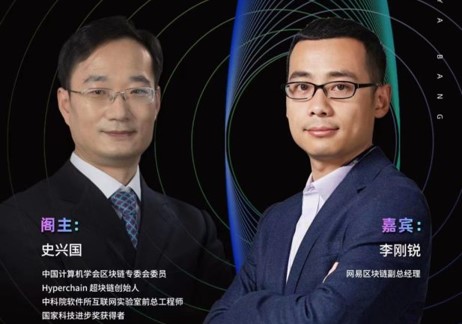
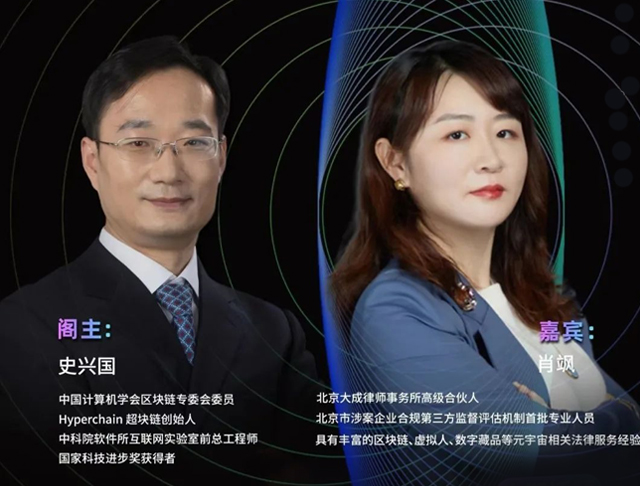
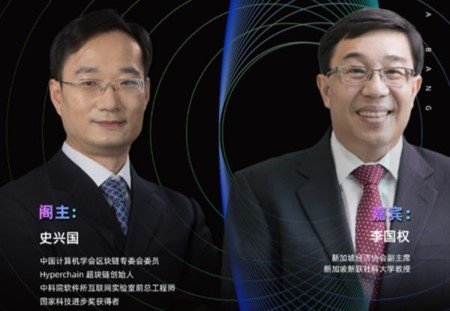
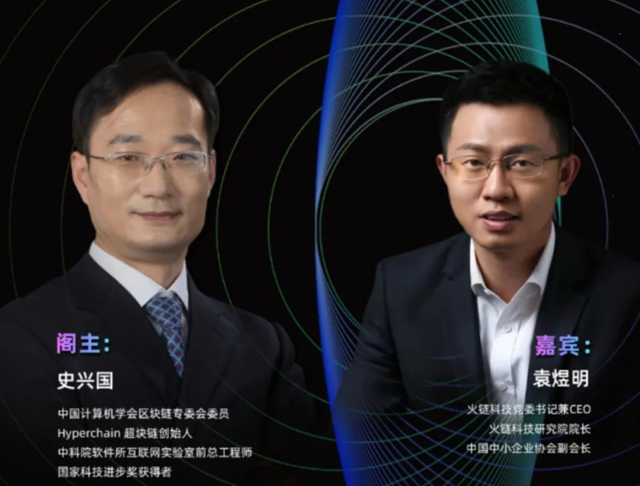
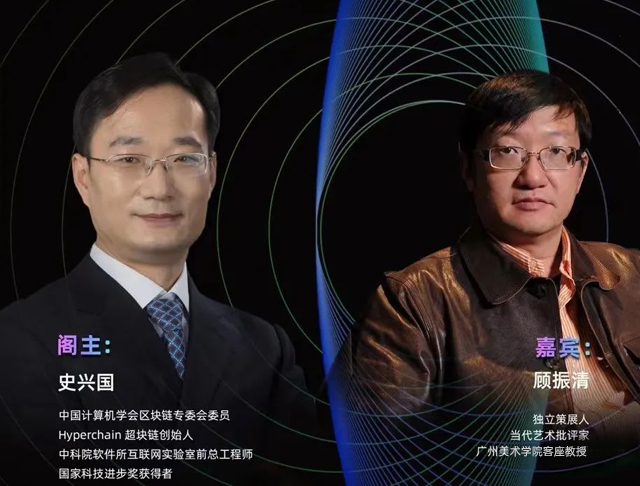
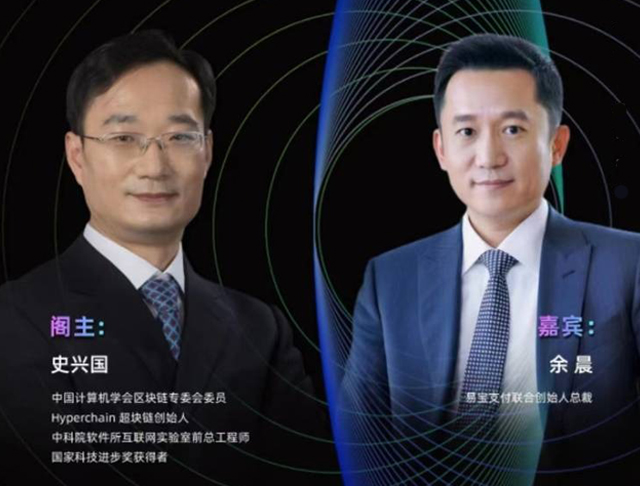
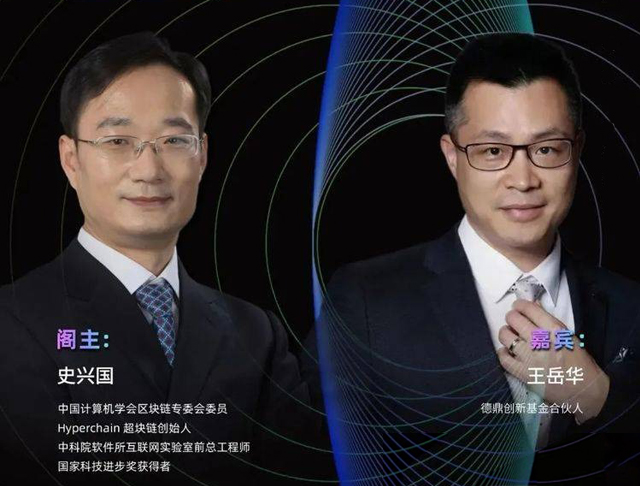
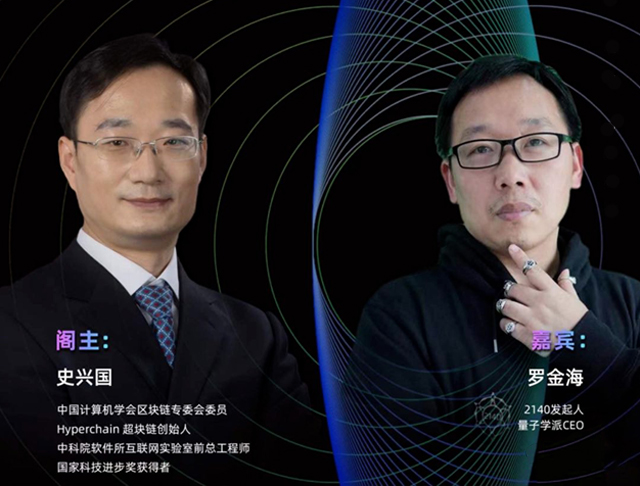
They represent teams of startups and giant enterprises respectively in the Web3 field, and examine the current development of Web3, meta-universe, and digital collections from multiple perspectives such as technology and business. In their words, professional discussions are vivid metaphors, but not boring words.
As the leader in Web3 technology
innovation, Mr. Shi Xingguo, and lawyer Xiao Sa, who focuses on legal business
in emerging technology fields, analyzed the legal risks and made suggestions
from multiple angles such as legislation, implementation, and enforcement in
the development of Web3 in China and the world, covering sub-fields such as
NFTs, digital collections, Gamefi, DAO, etc.
“Legislation and technology are not
contradictory, but should be combined,” said lawyer Xiao Sa in the
interview. Recently, she discussed the combination of Legislation and
technology with some technical researchers, using blockchain smart contracts as
legal rules to prevent users from engaging in illegal operations, which is
closer to the realm of “doing what one desires without overstepping
boundaries” advocated by Confucius. “Using technological methods to
make the operation of the law better and the law makes technology more capable
of shining the way forward for humanity, which benefits both parties.”
Highlights of today’s talk:
What trend does the regulatory change of Web3 reflect?
What are the similarities and differences in domestic and
foreign regulations in the development of Web3?
What are the development trends for NFTs and digital
collections?
What suggestions and thoughts do we have on the legal
identifications of NFTs and digital collections?
Does Gamefi have to rely on a Ponzi scheme to launch? What is
the future of Gamefi?
What are the possible ways for DAO in China under the current system
in China?
Listen to the two interpret Singapore’s
relevant policies, opportunities, and industry dynamics in the fields of Web3,
Metaverse, NFT, etc. They discuss the differences in regulatory approaches
between China and Singapore, and reflect on the Ethereum merger and exploration
of new public chains, telling us that blockchain cannot be developed without
the care of humanism and the calmness of technicism, and also full of infinite faith
for the true era of Web3.”
On the evening of September 5th, the
sixth episode of the fifth season of “Observing the Langya List” was
broadcasted, where Mr. Shi Xingguo, a member of the Blockchain Special
Committee of the China Computer Federation, winner of the National Science and Technology
Progress Award, founder of Hyperchain, and former chief engineer of the
Internet Laboratory of the Software Institute of the Chinese Academy of
Sciences, was the guest of this dialogue. He was joined by Mr. Yuan Yuming,
Party Secretary and CEO of Huochain Technology, Dean of Huochain Technology
Research Institute, and Vice President of the China Association of Small and
Medium Enterprises.
Gu Zhenqing is a critic who served as the
Chief Curator of the Shanghai Duolun Museum of Modern Art from 2003 to 2006,
the Art Director of the Chinese Contemporary Art Award (CCAA) in
2004, the Executive Director of the Shanghai Zhu Qizhan Art Museum from 2006 to
2008, and the Editor-in-Chief of “Visual Production” magazine. He was
a visiting associate professor of the Sculpture
Department at Taiwan National University of Arts from 2018 to
2020 and has been a visiting professor at the Guangzhou Academy of Fine Arts
since 2021.
Mr. Yu Chen has nearly 20 years of
experience in the fields of the internet, e-commerce, and software. He has
worked at Oracle Corporation, John Deere Health Care, and AT&T Bell
Labs (internship) in the US. He has years of experience working and living
in Silicon Valley, has successfully started a business in China, and has
long been interested in history and philosophy, which allows him to integrate
technology and humanities, reflect on the internet from diverse perspectives,
and contribute a lot to the popularization of the internet.
Recently, the founder of Hyperchain, Shi
Xingguo, was interviewed by 21Jingji to explain the Ethereum merger. In the
article “Controversial Ethereum ‘Merge’: Attempt to Reduce Power
Consumption from Proof of Work to Proof of Stake,” Shi Xingguo provided
detailed explanations of the Ethereum merger. He discussed the potential risks
(technical or moral) and how it would affect the global ecosystem. To what
extent would technological upgrades determine the development of the
cryptocurrency industry? Would the attitude of overseas regulatory agencies
towards cryptocurrencies change in response to this? How should we view the
hard fork, and how can we interpretate Vitalik Buterin’s optimistic views?
In this talk, Mr. Wang Yuehua shares his
unique insights on his investment logic and layout plans in the Web3
and metaverse fields, as well as hot topics such as new public chains and
GameFi.
The conversation explores the investment
opportunities and challenges in the Web3 and metaverse fields, as well as the
potential impact of new public chains, NFT, and GameFi on the future of
the blockchain industry.
The two big names discussed the topic of
“Why Web3 will be a rare opportunity for China to achieve a breakthrough
in the internet field?” and brought us a feast of ideas! One is a
blockchain technology “sweeping monk”, the other is a well-known science
fiction writer and technology preacher. Web3 technology, in their mouths,
has become not only technical but also literary and humanistic. This is a
profound dialogue that intertwines sensibility and rationality, idealism and
realism!
Hyperchain has partnered with the 3rd
digital space Relaverse, guardian for users’ health, and successfully provided
chain transfer and merge support on July 30th.
On July 29th, the Relaverse community
held its first all user vote on whether to integrate their blockchain
information. According to the voting results on July 30th, 96.94% of users
supported the unification of blockchain information, while 3.06% did not.